Explore Laurelhurst Living for Seattle Homebuyers
July 23, 2026
July 23, 2026
Looking for a Seattle neighborhood that feels calm, connected, and shaped by the outdoors? Laurelhurst stands out for exactly that reason. If you are exploring where to buy in Seattle, this guide will help you understand how Laurelhurst lives day to day, what kinds of homes you may find, and what details matter most as you compare blocks and properties. Let’s dive in.
Laurelhurst sits on Seattle’s northeast side, just east of the University of Washington. It occupies a hilly peninsula that reaches into Union Bay, which gives the neighborhood a tucked-away feel that is different from more urban parts of the city.
Seattle historical records show the area was once marketed around a nautical, seaside lifestyle. The neighborhood’s geography still supports that identity today, with water views, shoreline access points, and a strong connection to outdoor recreation.
One of Laurelhurst’s defining features is its topography. The streets do not follow a strict grid, and the neighborhood has a steep north-south grade, so the experience can change quickly from one block to the next.
For you as a buyer, that can affect privacy, light, views, driveway access, and even how a home sits on its lot. A house on one street may feel leafy and sheltered, while another just a short distance away may have a stronger connection to the water.
Seattle’s historical materials also note that the Lake Washington Ship Canal lowered the lake level enough to create additional lakefront property. That history helps explain why parts of Laurelhurst have such a close relationship to the shoreline today.
Laurelhurst is best understood as a recreation-forward residential neighborhood. This is not a place defined by a busy commercial strip. Instead, daily life tends to revolve around parks, shoreline access, local activities, and nearby destinations.
If you picture your ideal routine including a walk, a bike ride, a playfield stop, or time by the water, Laurelhurst offers a setting that supports that rhythm well. The neighborhood feels more about how you live than how much retail is packed into a few blocks.
The Laurelhurst Community Center and Playfield is one of the neighborhood’s main gathering places. Seattle Parks describes it as centrally located within the residential area, with views of Lake Washington and close access to Children’s Hospital, University Village, Magnuson Park, and the University of Washington.
The playfield includes ball fields, tennis courts, a children’s play area, meadows, and a walking path. The community center also reopened in Fall 2024 after accessibility upgrades, which adds to its role as a practical everyday resource for residents.
For public shoreline access, Belvoir Place is a key spot. Seattle Parks describes it as a small waterfront park overlooking Union Bay with hand-carry boat access.
That may not sound dramatic at first, but small access points like this can shape how a neighborhood feels. In Laurelhurst, the water is not just scenery. It is part of the everyday environment.
The Burke-Gilman Trail adds another important layer to Laurelhurst living. Seattle documents note that the trail roughly follows the area’s original shoreline, and today it serves walkers, runners, cyclists, skaters, and commuters.
For buyers who value easy outdoor movement, that matters. It means recreation and practical mobility can overlap, which is a major draw in many Seattle neighborhoods.
Laurelhurst also benefits from its proximity to Magnuson Park. Seattle Parks describes Magnuson as a 350-acre shoreline park with more than four miles of trails, a swimming beach, a boat launch, wetlands, sports fields, and a dog off-leash area.
That gives Laurelhurst residents access to a much larger outdoor network within a short trip. If you want both a quiet residential setting and easy access to major open space, this nearby park is a meaningful advantage.
Laurelhurst is not only scenic. It also has an organized civic culture. The Laurelhurst Community Council says it was established in 1920 to support improvement and beautification, and it remains active around issues like transportation, land use, and crime prevention.
That kind of long-running neighborhood involvement can influence how a place feels over time. For buyers, it suggests a community where residents pay attention to how the neighborhood functions, not just how it looks.
Laurelhurst was first platted in 1906 and annexed to Seattle in 1910, but major homebuilding did not take off until the 1920s. Because development happened in waves over time, the housing stock is not uniform.
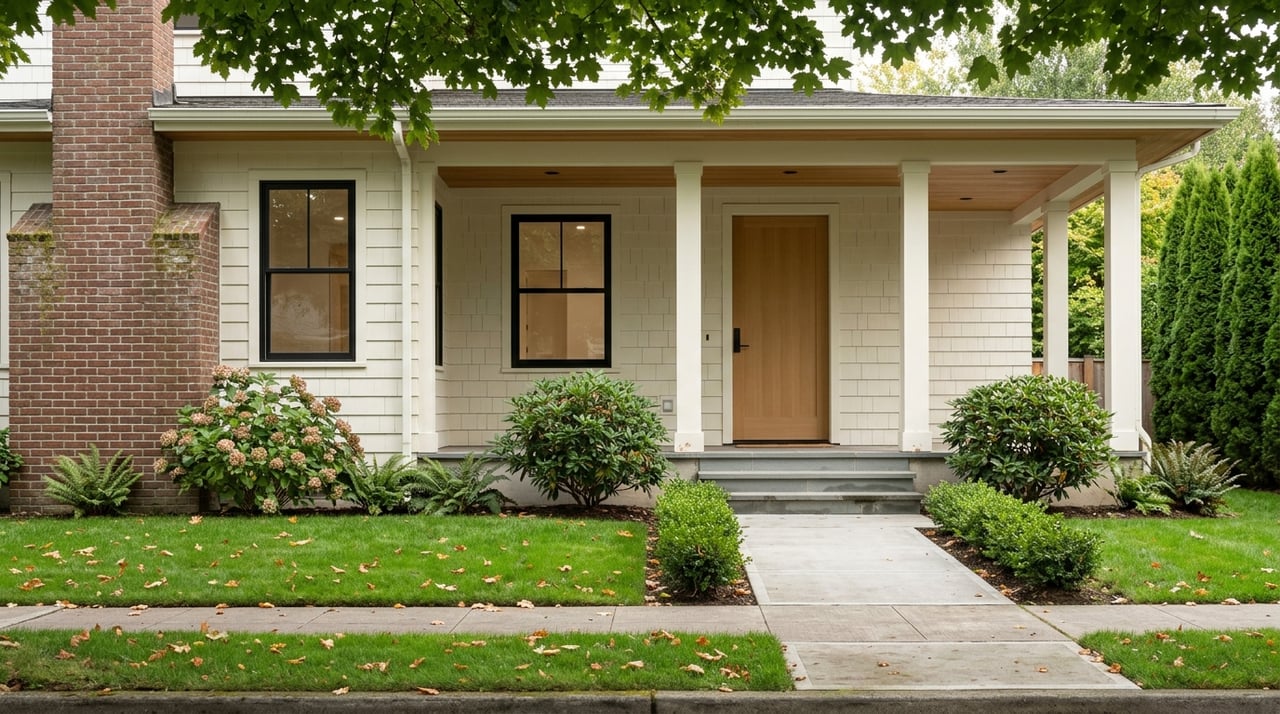
You are likely to notice a mix of older homes, later updates, and renovations shaped by different building periods. Seattle records also describe Laurelhurst as largely single-family in character, with only a few apartments and commercial buildings along Sand Point Way NE.
That pattern matters when you are comparing properties. In Laurelhurst, the value and feel of a home may come as much from the lot, landscaping, and elevation as from square footage alone.
Because streets curve and topography shifts, Laurelhurst rewards buyers who pay attention to the details of each block. Two homes with similar stats on paper can live very differently in person.
As you tour, it helps to look closely at:
This is one of those neighborhoods where a careful, in-person read can tell you more than a listing summary alone.
Laurelhurst’s identity is closely tied to early- and mid-20th-century development. One visible example is the Laurelhurst Community Center, built in 1935 in Tudor style and recognized in city records as a significant civic landmark.
That does not mean every home looks historic in the same way. It does mean the neighborhood’s broader visual character tends to come from established homes, mature landscaping, and gradual change over time rather than large-scale recent redevelopment.
Laurelhurst may be a strong fit if you want a neighborhood that feels residential, established, and tied to outdoor living. Its appeal is less about dense retail and more about water, parks, trails, and a calm street experience.
You may especially appreciate Laurelhurst if your priorities include:
If, on the other hand, you want a highly urban setting with a dense commercial core at the center of daily life, Laurelhurst may feel more residential than you prefer.
Because Laurelhurst varies so much block by block, your home search should stay focused on lifestyle fit as much as property details. A few practical steps can help.
First, visit at different times of day if possible. That gives you a better sense of traffic flow, light, and how the street feels when people are out walking, heading to the park, or returning home.
Second, look beyond the house itself. In Laurelhurst, topography, access, and the relationship to parks or shoreline areas can meaningfully shape everyday use.
Third, compare the neighborhood rhythm to your actual habits. If you know you will use trails, playfields, waterfront spaces, and nearby parks regularly, Laurelhurst’s strengths may become much more valuable to you over time.
In a neighborhood like Laurelhurst, real value often lives in details that are easy to miss online. Street layout, elevation, setting, and the feel of a particular pocket can all influence your experience as a homeowner.
That is where experienced local guidance makes a difference. A thoughtful buyer strategy can help you narrow in on the parts of Laurelhurst that best match your routines, goals, and long-term priorities.
If you are considering Laurelhurst or comparing it with other Seattle neighborhoods, Larissa Wilson can help you evaluate homes with a sharp eye for livability, design, and location so you can move forward with confidence.
Larissa's passion is helping people through the steps of buying and selling. She is willing to keep her clients involved throughout the entire process, but at the same time she doesn't want stress with the details, either, which is a part of what hiring her is all about! She knows the community and surrounding areas, including West Seattle, Greater Seattle and the Eastside.