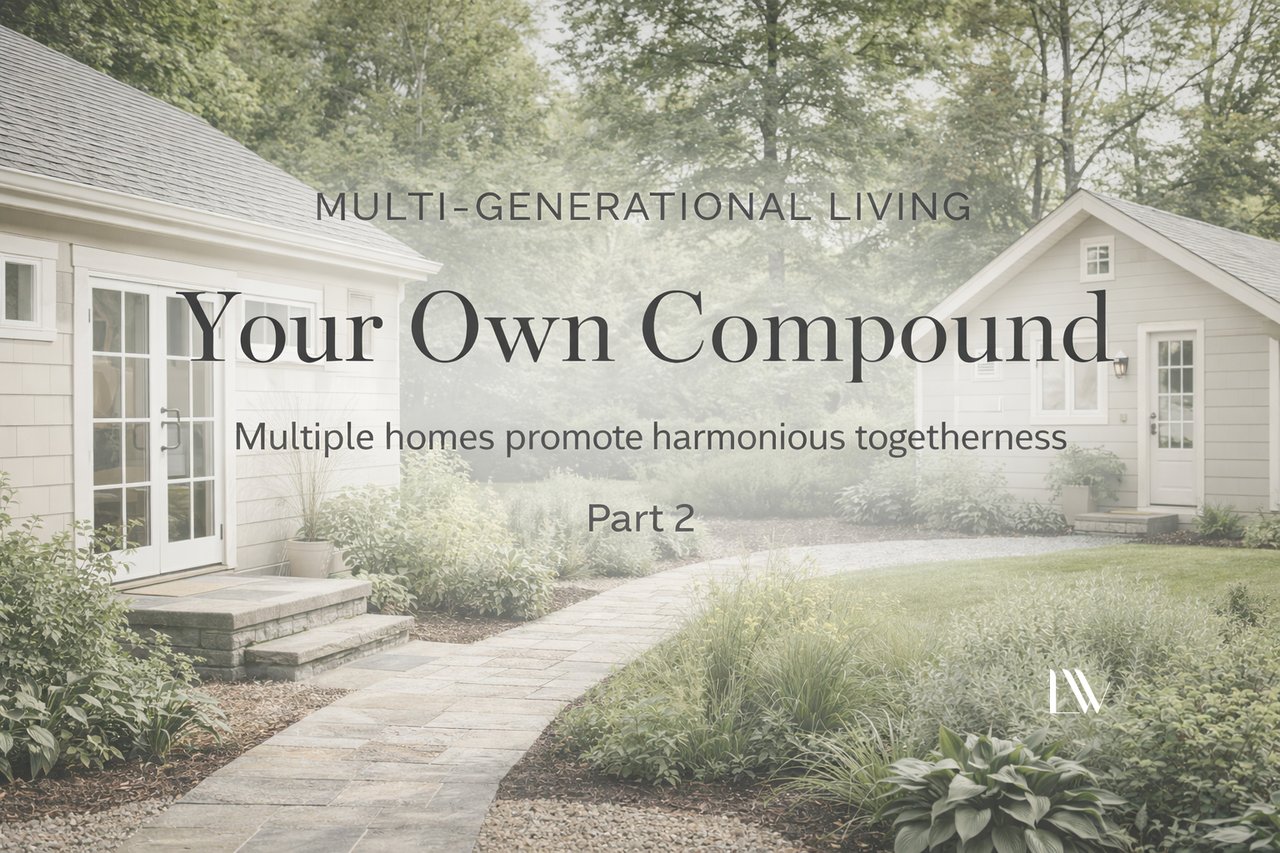
Your Own Compound
Rob Mathison February 7, 2026
Rob Mathison February 7, 2026
If Part 1 was about why multigenerational living is rising, Part 2 is about the dream version of it:
living close, without living on top of each other.
Because even when you adore your family, you may not want to share a kitchen with them forever. You might want Grandma and Grandpa nearby—but not hearing every blender smoothie and every teenager argument. You may want your adult kid to have a soft landing… with their own front door.
That’s the heart of the “family compound” idea: one property, multiple homes—harmonious togetherness with breathing room.
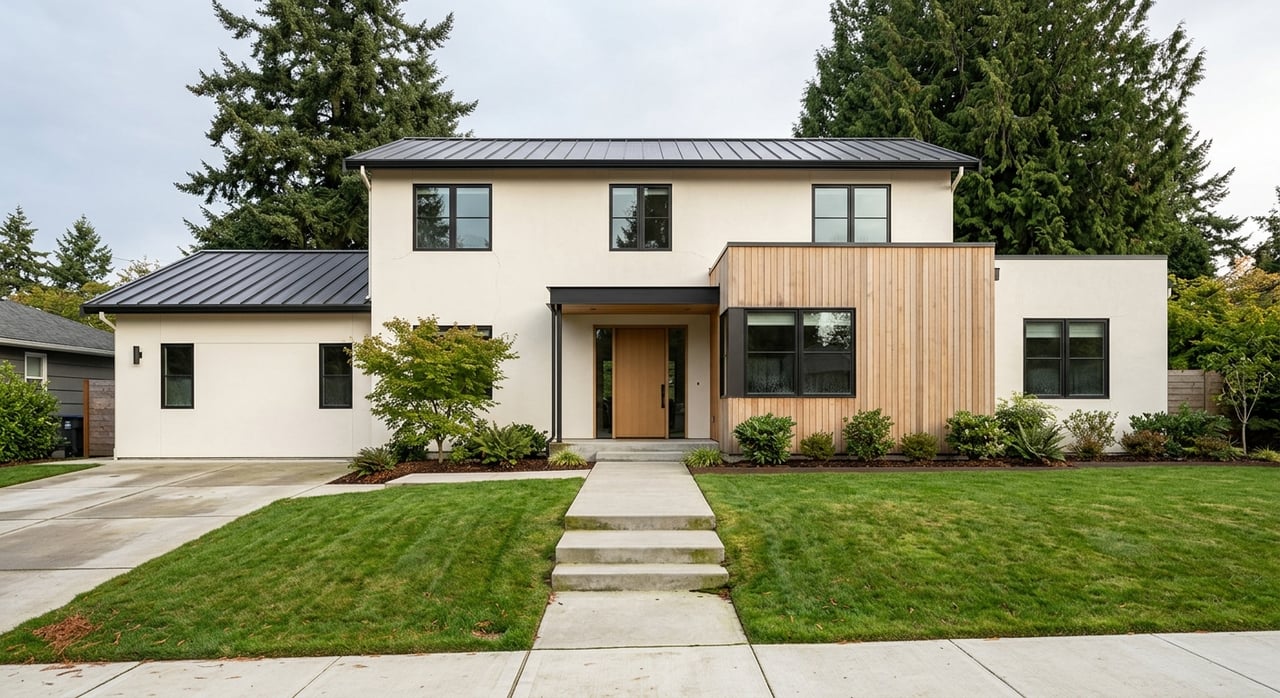
When people picture a compound, they often imagine multiple houses side-by-side on separate lots, like a little family village. That’s possible, but in Seattle it usually means assembling several homes on one street—expensive, complicated, and not very realistic for most families.
So instead, many families are exploring a more achievable Plan B:
On many residential lots, it’s increasingly common to create a property that includes a combination of:
A primary home
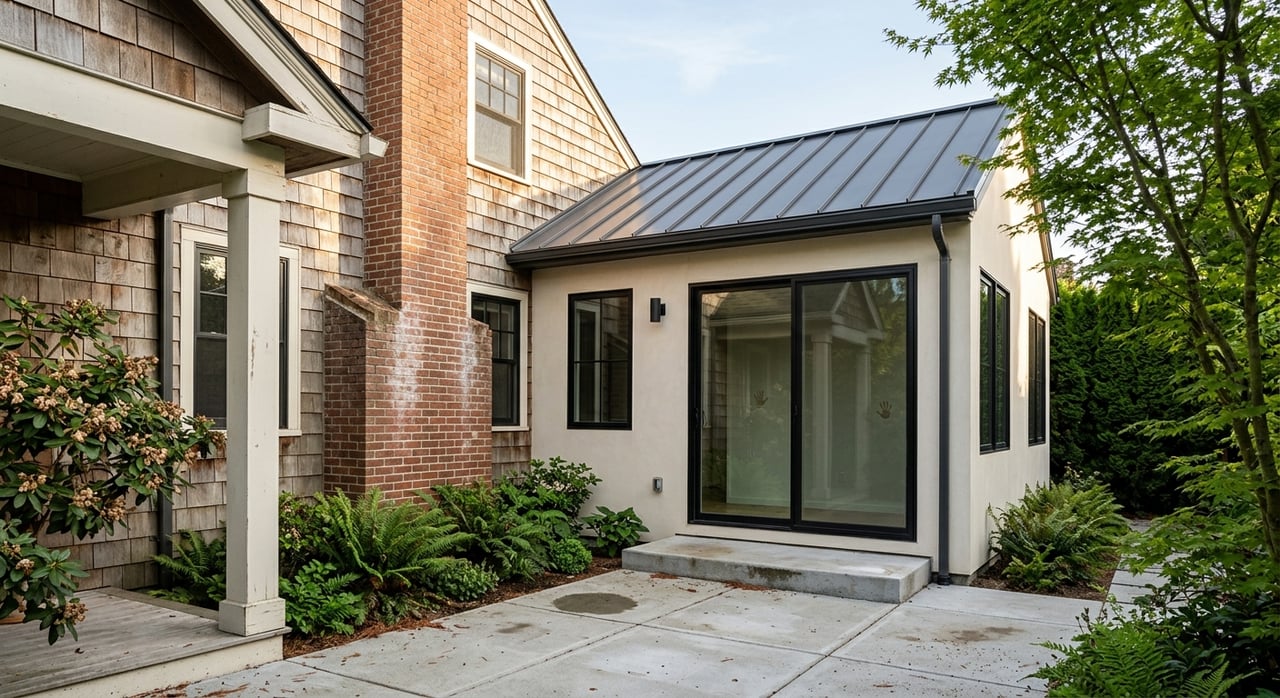
An attached ADU (Accessory Dwelling Unit—think: a separate living space connected to the main house)
A detached DADU (Detached ADU—think: backyard cottage)
When done well, this can create what people actually want:
separate kitchens
separate entrances
separate living rooms
more privacy and fewer daily friction points
In short: everyone has their own “home base,” while still being close enough to share life.
When you hear the word condo, you probably picture:
a tall building
shared hallways
elevators
monthly HOA dues
rules about everything from paint colors to pets
That’s the “traditional condo” image—and it’s not wrong.
But there’s another kind of condo structure that matters a lot for family compounds:
An air-space condo is a legal way to create separate ownership for multiple homes that share the same underlying parcel of land.
Instead of owning “Unit 307 in a building,” you might own:
the air-space that defines your home
plus your share of certain common elements (like the land, driveway, utilities, or shared courtyard—depending on the setup)
The big idea is this:
multiple homes can exist on one parcel, but an air-space condo can allow them to be legally separated into distinct, ownable units.
That matters because it creates flexibility:
If a family member needs to move later, the family may be able to sell one home without selling the entire property (depending on how it’s structured).
It can allow different generations to build equity in their own dwelling.
It can make a multi-home property feel less like “we’re all locked in forever,” and more like a smart plan that can adapt as life changes.
And it doesn’t have to feel like “condo living.” Many air-space condos look like:
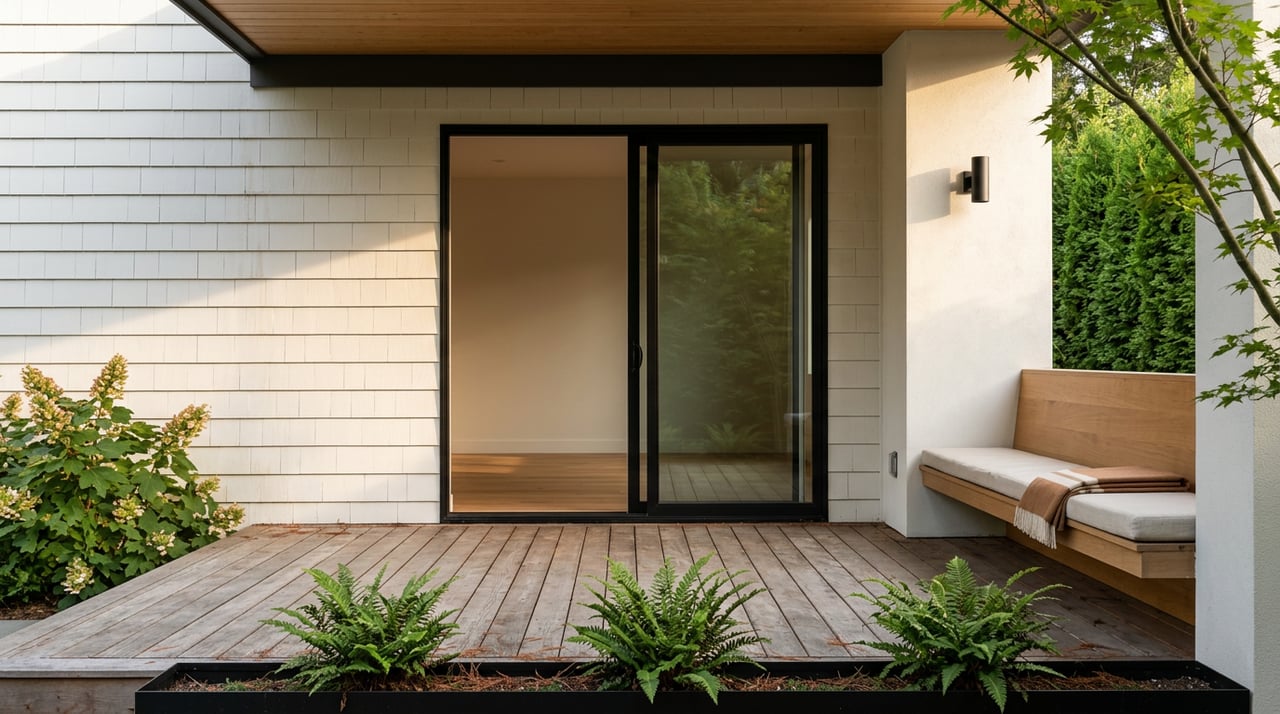
two detached homes in a courtyard
a main home + backyard cottage with clearly defined space
small clusters of homes that feel like single-family living—just legally structured as condos for ownership and shared elements
Because it supports what most families actually want:
Closeness without collision.
Togetherness without losing your own rhythms.
Help nearby… without giving up privacy.
It can also make logistics easier:
built-in childcare support
easier aging-in-place planning
shared errands, rides, and pet care
more “village,” less overwhelm
If you’re dreaming of a family compound, you don’t necessarily need three houses on three lots.
In many cases, the more realistic path is one great property—with thoughtfully designed separate spaces—and, when appropriate, an air-space condo structure that creates flexibility and long-term options.
In Part 3, we’ll get more practical: what layouts actually work, what to watch out for, and how to balance privacy, parking, and daily life.
Larissa's passion is helping people through the steps of buying and selling. She is willing to keep her clients involved throughout the entire process, but at the same time she doesn't want stress with the details, either, which is a part of what hiring her is all about! She knows the community and surrounding areas, including West Seattle, Greater Seattle and the Eastside.