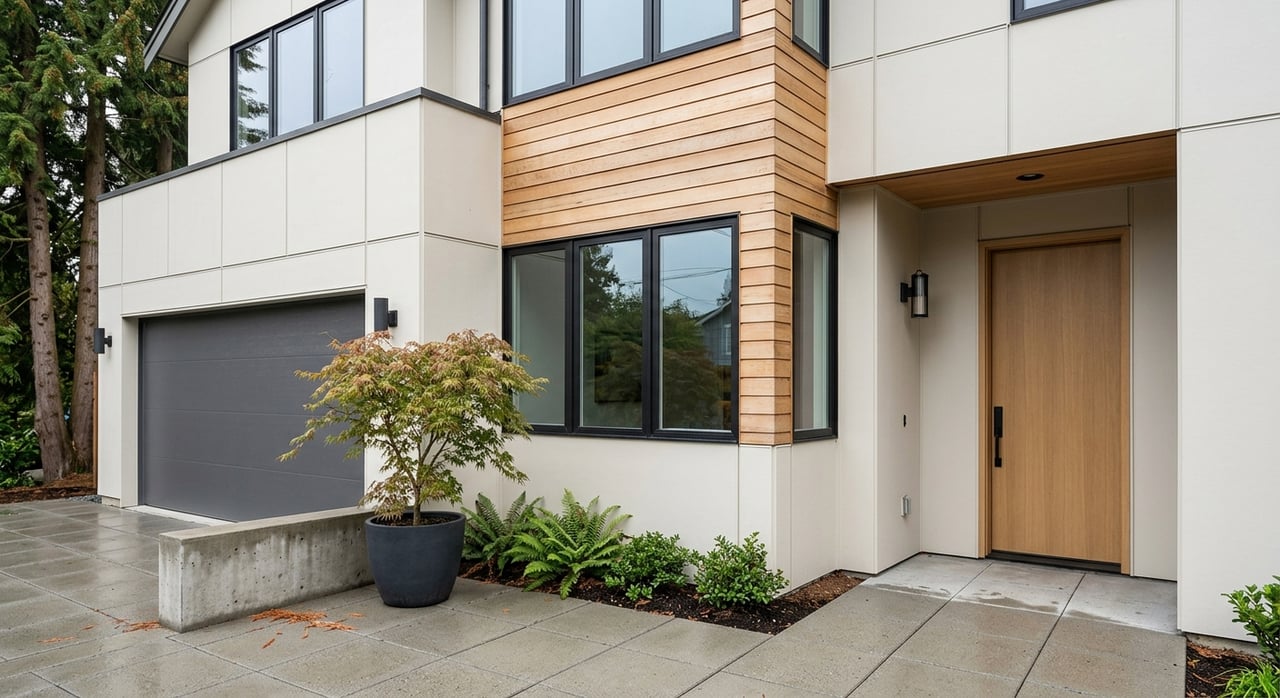
Redmond vs Bellevue: How to Decide Where to Live
April 2, 2026
April 2, 2026
Trying to choose between Redmond and Bellevue can feel like splitting hairs until you look at how differently each city functions for a tech-driven lifestyle. If you work on the Eastside, your daily commute, housing budget, and long-term goals can all shift depending on which side of the comparison fits you best. The good news is that both cities offer strong fundamentals, and once you understand the tradeoffs, the decision gets much clearer. Let’s dive in.
If you want the short version, Redmond tends to offer a slightly lower price point and stronger alignment with Microsoft-centered commuting, while Bellevue tends to offer a more urban feel, faster market movement, and higher pricing.
Recent Redfin data shows Redmond with a median sale price of $1,532,500 and a median of $632 per square foot, while Bellevue came in at $1,575,000 and $708 per square foot. Bellevue also moved faster, with homes selling in about 10 days compared with about 28 days in Redmond, according to Redfin market data for Redmond and Bellevue.
That pricing gap matters. Bellevue’s price per square foot is about $76 higher, or roughly 12% above Redmond, which can affect what size home or type of property you can buy.
For many tech buyers, Redmond stands out because it can provide a bit more flexibility on price. Census Reporter’s 2024 ACS data shows a median owner-occupied home value of about $1,196,800 in Redmond compared with about $1,508,500 in Bellevue, reinforcing Bellevue’s higher-value baseline.
That does not mean Redmond is a bargain market. It is still highly competitive, with homes receiving about 2 offers on average and selling for roughly 99.4% of list price, based on Redfin’s local housing data.
Bellevue is also very competitive, but the pace is more intense. Homes there receive about 3 offers on average and sell for roughly 99.5% of list price, which points to a market where buyers often need to make decisions quickly.
If you want more time to compare options, Redmond may feel a bit less compressed. If you are comfortable acting fast and want Bellevue’s location and urban energy, that faster pace may be worth it.
Transit has changed the conversation in a major way. As of March 28, 2026, the full 2 Line opened across Lake Washington, completing the East Link connection and linking the Eastside into the regional light rail system, according to Sound Transit.
The City of Bellevue notes that the 2 Line extends 14 miles from downtown Seattle to the Overlake area in Redmond, with stations in South Bellevue, downtown Bellevue, BelRed, and Overlake. If you work in downtown Bellevue, Wilburton, BelRed, or regularly head into Seattle, Bellevue has a clear transit advantage because of those station locations.
Redmond becomes especially compelling if your routine centers on Microsoft or the Overlake area. The City of Redmond says the light rail extension is designed to provide fast, frequent, reliable connections around town, Bellevue, Seattle, and the broader region, with direct access improvements into Redmond Technology Station and other station-area upgrades.
Sound Transit also notes that Downtown Redmond Station is served by King County Metro route 250, RapidRide B Line, and ST Express 545. That combination makes Redmond especially practical if you want multiple ways to connect without relying entirely on your car.
Your buying decision is not just about city name. It is also about what kind of home you want and how you want to live.
Redmond’s housing element says the city’s 2021 housing stock was about 37% detached single-family, 17% duplex-multiplex, and 46% multifamily with five or more units. That means Redmond has a more apartment- and condo-heavy overall mix, which can create more options if you are looking for attached housing or a lower-maintenance setup.
Bellevue’s 2022 comprehensive plan EIS says about half of Bellevue’s housing units are single-family and half are multifamily, with multifamily housing concentrated in mixed-use centers. It also notes that about three-quarters of the city’s land area is zoned for single-family uses.
In practical terms, Bellevue still carries a stronger detached-house footprint even as it adds density in places like Downtown, East Main, Wilburton, and BelRed. If you picture a more urban center with established residential pockets around it, Bellevue may line up better with that vision.
Many buyers want to compare school districts as part of the move, and both cities offer established public district options. Redmond buyers often look at Lake Washington School District, while Bellevue buyers often focus on Bellevue School District.
According to the National Center for Education Statistics, Bellevue School District has 30 schools, 20,339 students, and a 17.76 student-teacher ratio. Lake Washington School District has 57 schools, 30,986 students, and a 17.91 student-teacher ratio.
Both districts were also recognized in March 2026 by OSPI’s State Superintendent’s Award for Educational Excellence. Bellevue School District was named one of the top 25 districts in the state for academic achievement, and Lake Washington School District was also selected as one of 25 award-winning districts for student achievement, based on district reporting from Bellevue School District and Lake Washington School District.
Because the district-level signals are fairly similar, your best next step may be to look closely at attendance areas, program options, and the type of district structure you prefer. Lake Washington School District is larger and includes specialized secondary options such as Redmond High and Tesla STEM High School, which may matter if you want to explore program variety.
When buyers ask about long-term appreciation, the answer is usually more nuanced than picking a city winner. Bellevue’s higher pricing, faster market pace, and more built-out land pattern suggest a scarcity-driven value story, especially in established areas and in the downtown, BelRed, and Wilburton corridor.
That does not guarantee future performance, but it does help explain why Bellevue often commands a premium. When land is more constrained and demand stays high, values can remain resilient.
Redmond has a different kind of strength. The city’s preferred housing alternative plans for 29,700 net new units by 2050, with most new homes described as multifamily apartments, while Bellevue’s 2044 planning framework calls for about 35,000 additional housing units and 70,000 jobs.
Redmond also benefits from the scale of Microsoft’s local presence. Microsoft’s campus fact sheet notes a 502-acre campus and 15 million square feet of office space in King County, along with a company-funded transit program that includes ORCA cards, carpool and vanpool support, and Connector buses. That job base, combined with rail investment, supports the case for durable housing demand in Microsoft-adjacent areas.
For many tech workers, the real answer is not simply Redmond or Bellevue. It is which submarket best matches your commute, budget, property type, and timeline.
Transit-adjacent and job-adjacent pockets in both cities are likely to matter more than the city name alone. If you are weighing a condo near transit against a detached home farther out, or comparing a Microsoft-oriented commute with a downtown Bellevue work routine, those details can shape your long-term satisfaction just as much as the purchase price.
If you want help comparing specific neighborhoods, commute patterns, and resale factors in a practical way, Larissa Wilson can help you sort through the options and build a strategy around how you actually live and work.
Larissa's passion is helping people through the steps of buying and selling. She is willing to keep her clients involved throughout the entire process, but at the same time she doesn't want stress with the details, either, which is a part of what hiring her is all about! She knows the community and surrounding areas, including West Seattle, Greater Seattle and the Eastside.